

HOUSE TOUR #20, January 2026
Art viewing
A Sigh in the Night: ‘Ach’ (2015) by Leiko Ikemura
We are launching the new year with an exciting guided tour: we will delve into the mysterious painting ‘Ach’ by Leiko Ikemura from our exhibition faces of mind. The exhibition explores the human head as a mirror, stage and projection surface, and the work ‘Ach’ is a perfect example of this idea.
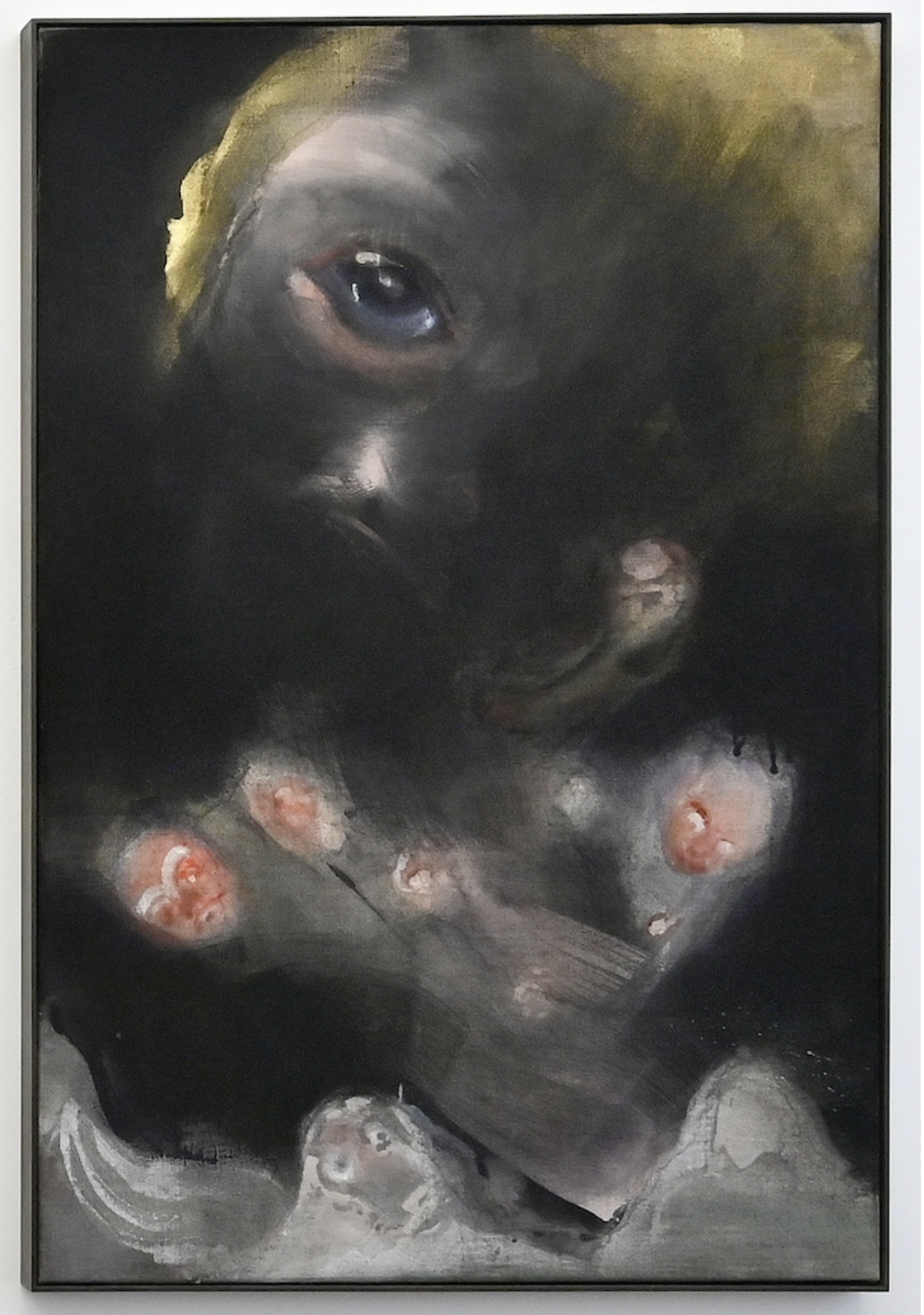
Leiko Ikemura's painting ‘Ach’ (2015) depicts a dreamlike, elusive face in a dark, almost black pictorial space. A large, single eye in the upper left corner of the canvas dominates the image. It gazes slightly sideways out of the shadows and appears alert, vulnerable and at the same time distant. In relation to the face, it appears oversized, with the iris filling almost the entire eye. This reinforces the melancholic impression. At the same time, this gaze is reminiscent of a child's eye, whose large proportions and pupils instinctively evoke closeness and empathy. The facial features dissolve into soft, blurred transitions; nothing is clearly defined, everything seems to float in semi-darkness. The nose stands out strikingly and appears both human and animalistic. Somewhere between a pig's nose and a dog's snout, it lends the figure a certain vulnerability.
The muted colour palette of grey, black and brown tones is interspersed with golden, almost luminous areas that lend the picture a mysterious, almost sacred atmosphere. The light appears diffuse, as if it were coming from within the figure.
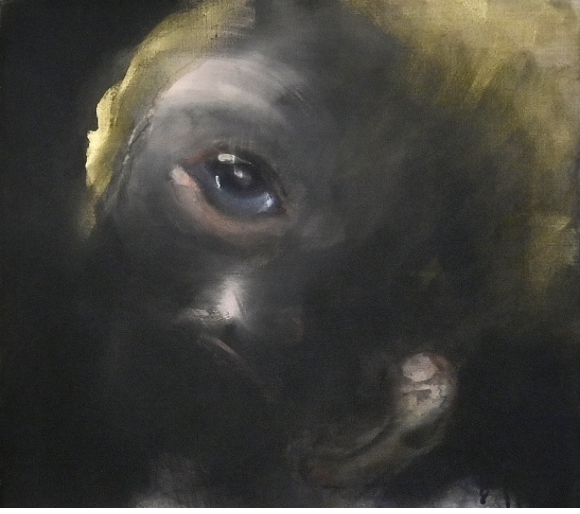
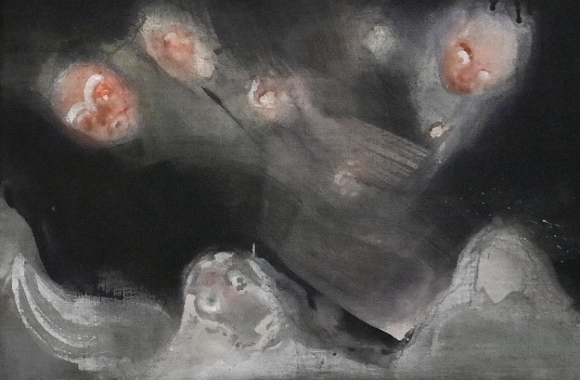
Image credits: Leiko Ikemura, "Ach", 2015, Courtesy of the artist. Installation view of the faces of mind-exhibition 2026. © Michael Lüder
Several small, reddish-pink faces appear in the lower part of the picture like floating fragments. They are reminiscent of childlike or embryonic forms: vulnerable, unprotected, between appearing and disappearing.
Overall, the work creates a melancholic, introspective mood. It seems like a visualisation of an inner state. Perhaps pain, perhaps longing, or a quiet ‘oh’ in the sense of a sigh. The image invites feeling rather than clear understanding. It unfolds its effect through suggestion, atmosphere and emotional density.